UX Design
E-Commerce
B2B
In this consulting engagement at IBM, I helped design Shell China MarketHub, a B2B e-commerce platform supporting $1.37 billion in annual transaction volume.
79%
reduction in customer service calls
Minutes
ordering time reduced from hours
Business workflow gaps
Interaction gaps
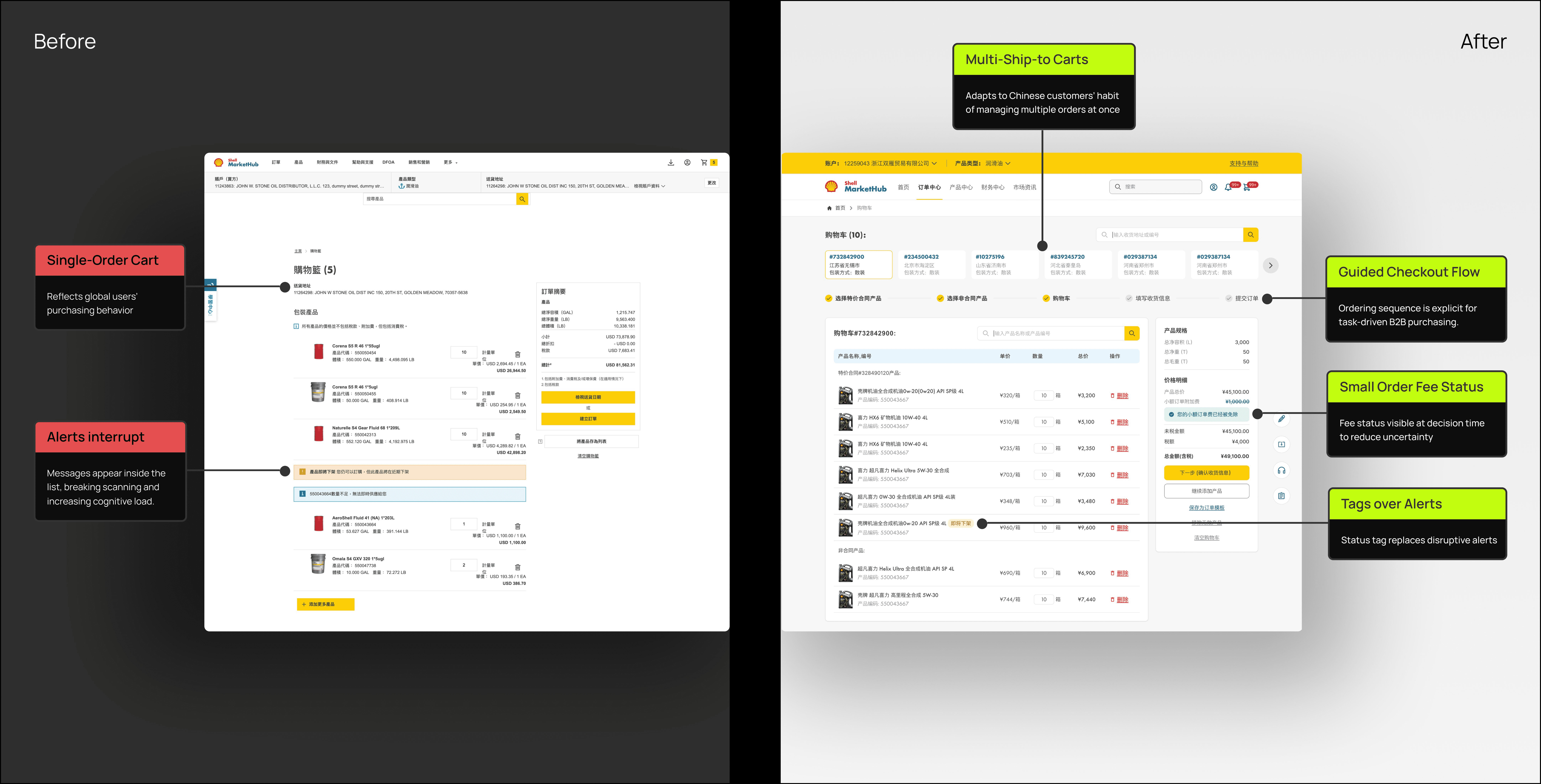
Shopping cart: single cart w/ alert interruption→ muti carts w/ clean tags.
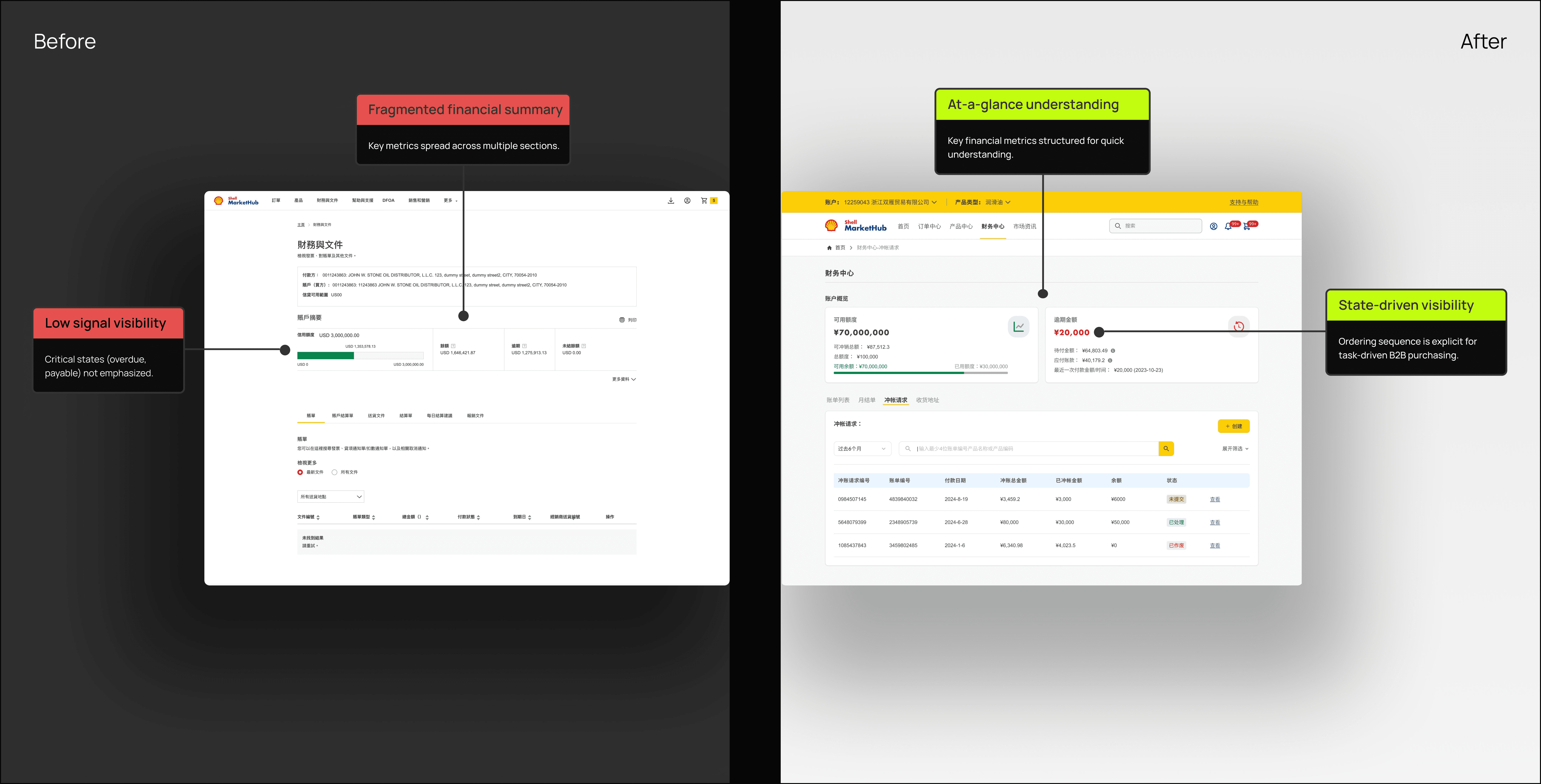
Financial overview: scattered financial data → structured financial overview.
Search & add item: interrupted entry flow → stable entry pattern.
Payment allocation feature: guided flow with clear sequence and lower cognitive load.
Coming from an accounting background, I knew this task had a natural sequence. I broke the flow into steps that followed how the task actually works. Each step only asks for what's needed at that moment.
Not every design direction made it into the final product.
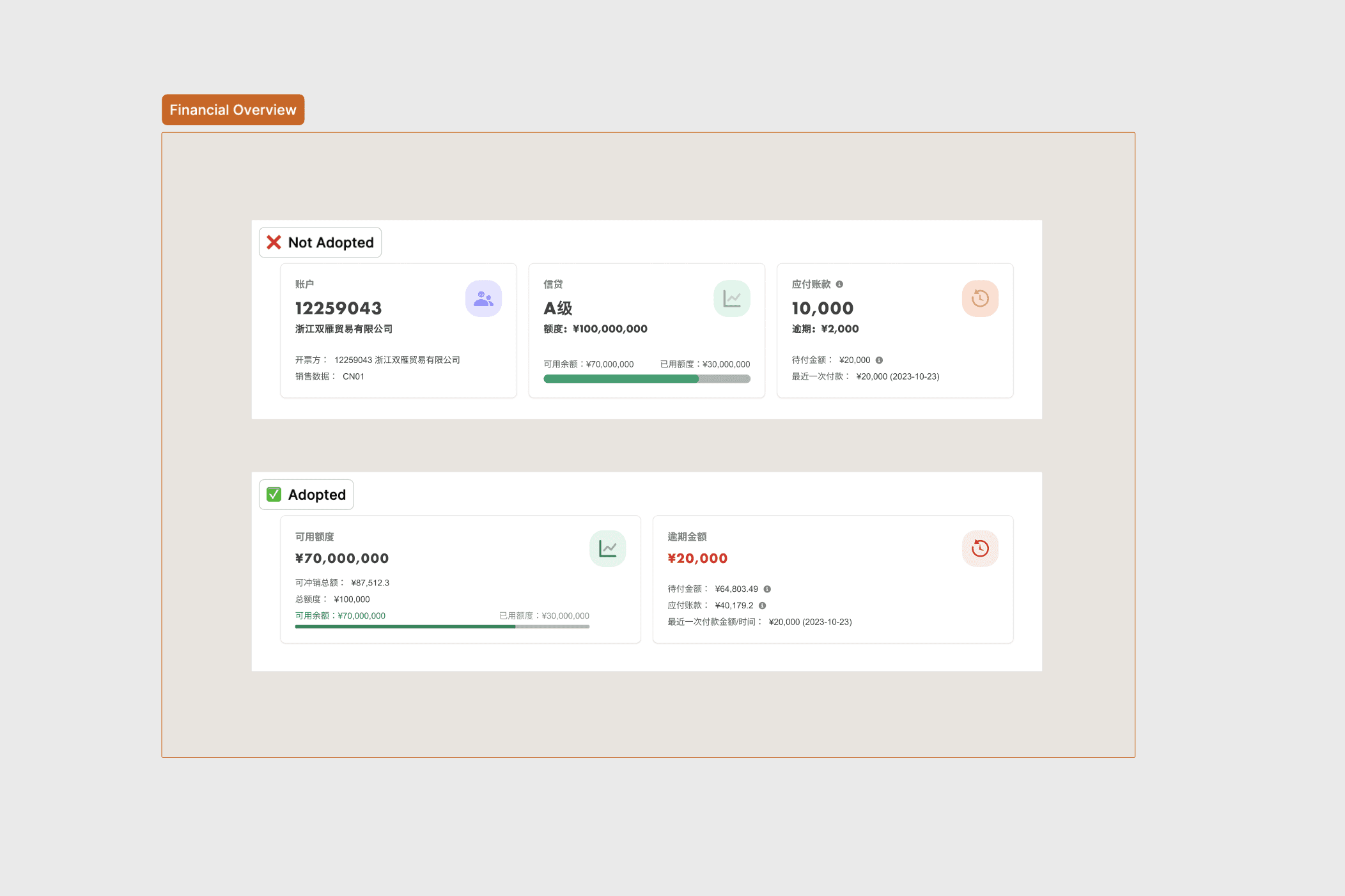
My initial 3-card financial overview gave users a broader account snapshot. I later simplified it into a 2-card layout to make the most decision-critical signals easier to scan before ordering: available credit and overdue balance.
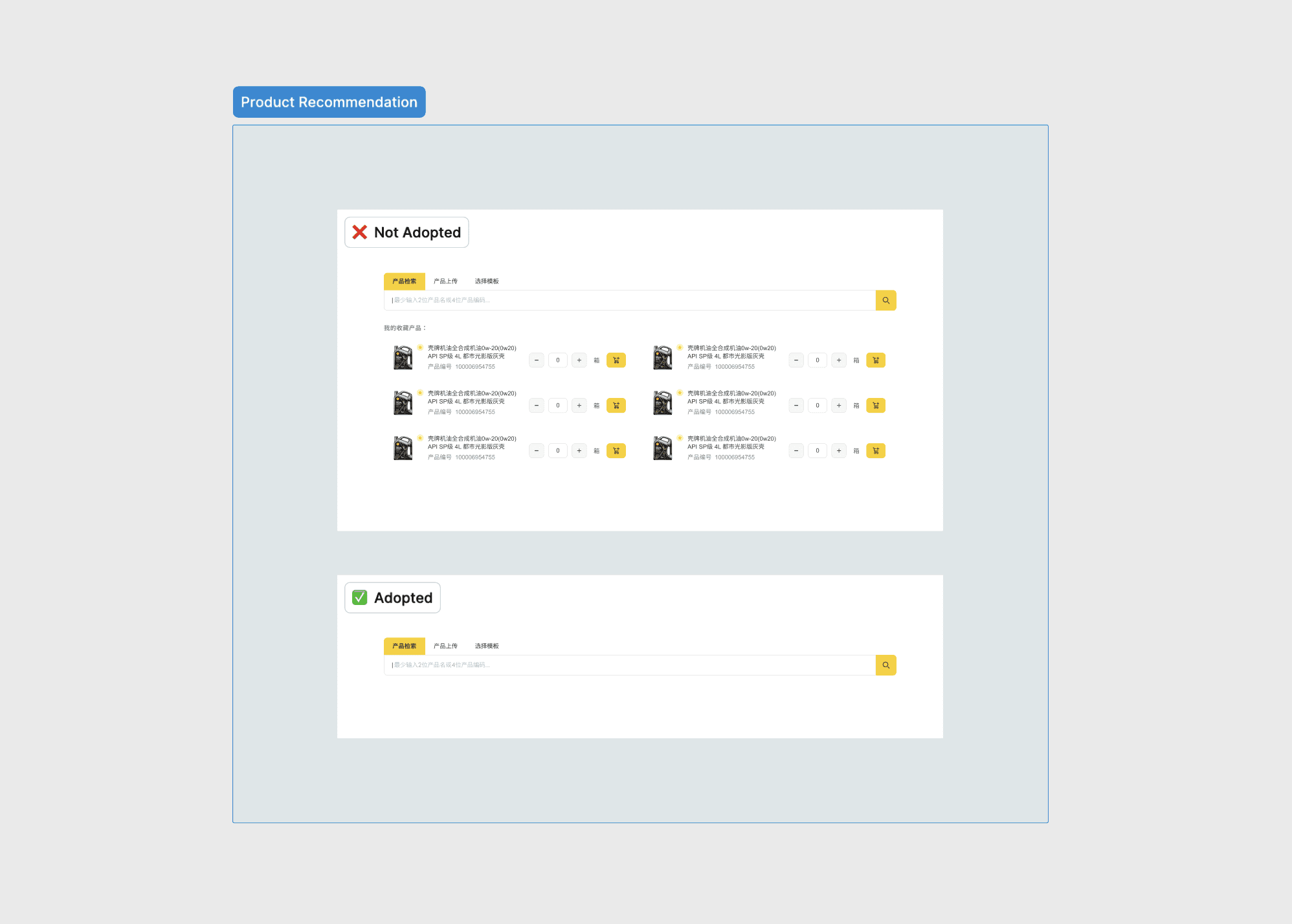
In early versions, I explored a product recommendation feature to help users discover relevant items during ordering. I later learned from our BA that users ordered from fixed procurement lists rather than browsing, so I removed this feature since recommendations would create noise instead of value.
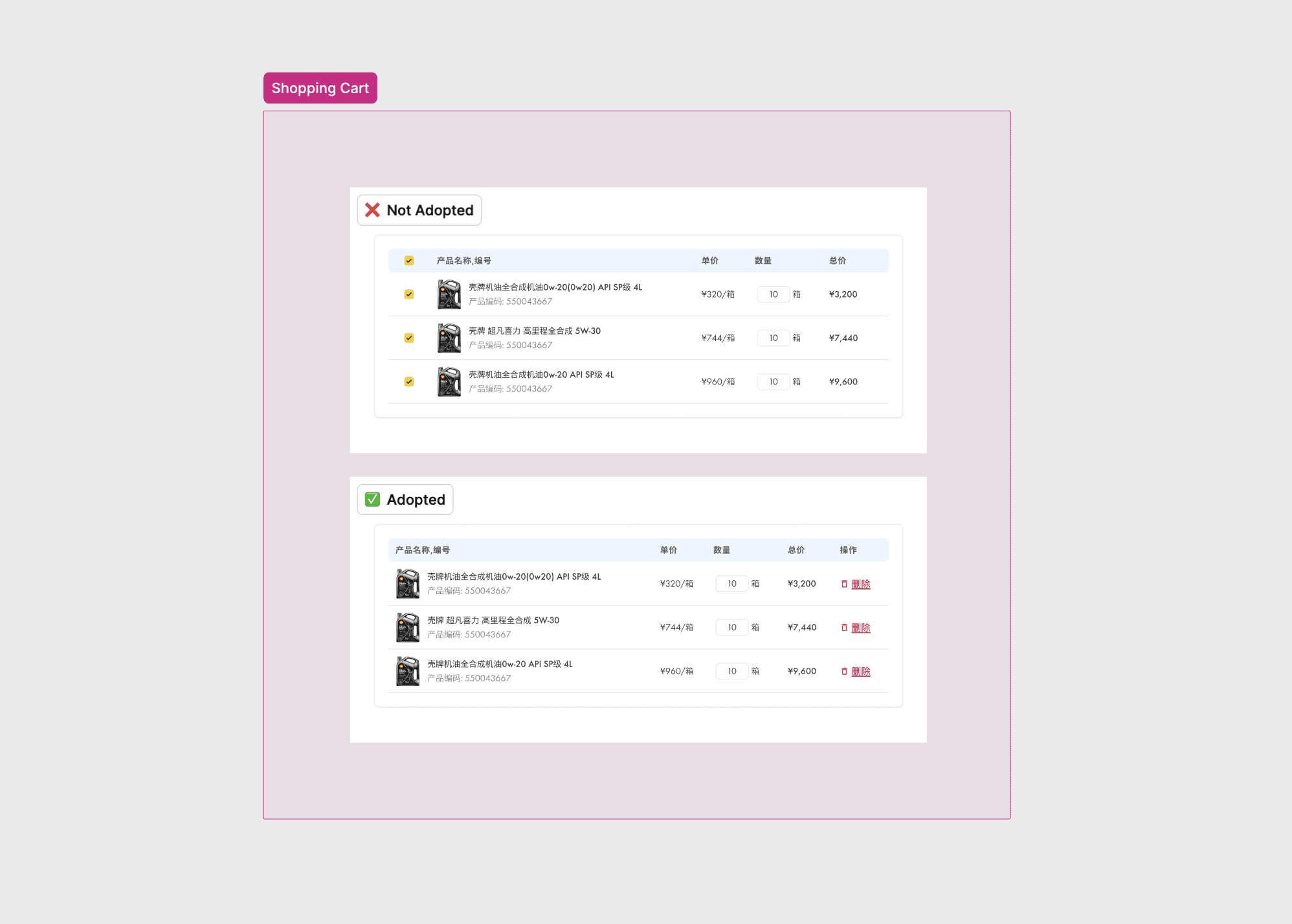
For the shopping cart, I explored partial checkout, but each checkbox would change the pricing equation and trigger heavy recalculation, and it could also expose pricing logic through user toggling, so I went with full-cart checkout.
Working closely with BAs and engineers meant design decisions were always in conversation with business and technical realities, and I genuinely enjoyed that. That collaboration taught me when to advocate and when to adapt.
My team and I at Shell's Beijing office — yes, Shell keeps a real Ferrari F1 race car in their lobby🤣, part of Shell's iconic partnership with Ferrari 🏎️🏎️🏎️

direct, earlier validation
to bring key design decisions closer to end users.
feedback beyond launch